
PaC 2026: Shaping Systems, Storytelling and Power
Friday, 18 September, 2026
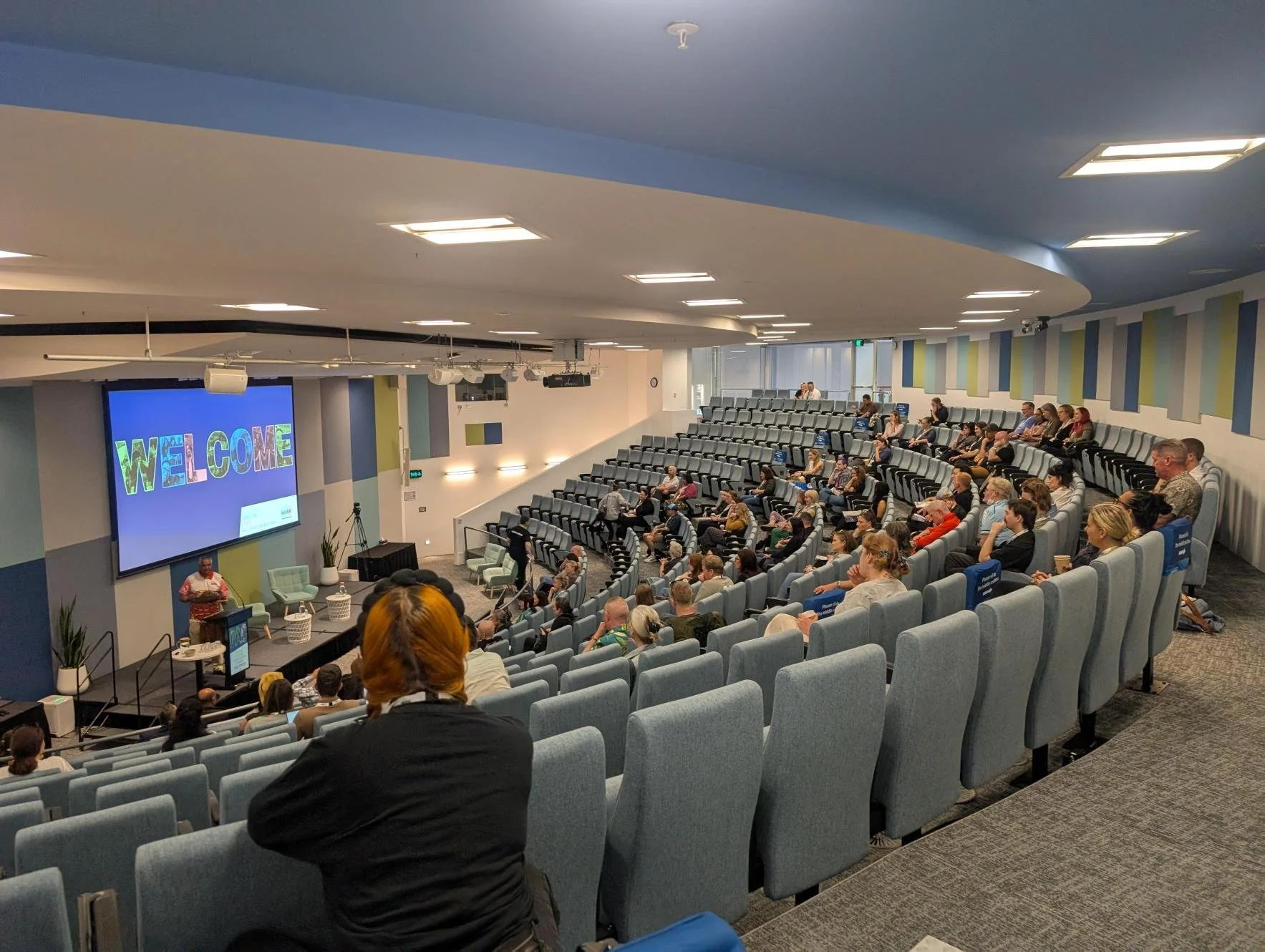
NUAA's Peers and Consumers (PaC) Forum returned on Thursday 3rd and Friday 4th of September 2026, bringing peers, workers, clinicians and allies together at the NSW Teacher’s Federation in Sydney.
This year’s theme, ‘Shaping Systems, Storytelling, and Power’ explores how lived and living experience (LLE) is central to shaping the systems that shape us. At the heart of this work is storytelling, how we name our experiences, share our LLE, and influence change.
Speakers and attendees reflected on how storytelling becomes a tool for shaping culture, informing practice, and shifting power, as peers increasingly move into leadership, advocacy, clinical, legal, and policy spaces.
PaC 2026 brought open and courageous conversations about what it means to be a peer in a time of growth and evolution, all linking to this common theme.
Content Note: This article touches on stigma, overdose, and suicide. If anything mentioned is distressing or you’d like to talk it through, NUAA’s PeerLine is available on 1800 644 413.
Two Keynotes, One Idea
PaC 2026 featured two keynote speakers who, on paper, have very different jobs. Raechel Wallace is NADA’s Aboriginal Program Manager. Daniel Madeddu is the Executive Director of the Centre for Alcohol and Other Drugs at NSW Health. But both keynotes landed in a similar place; whose story gets to shape the system, and what it costs to tell it.
Raechel opened day one admitting she'd never wanted to give a keynote speech in her life.
“Anyone who knows me knows I do not like a stage, and I do not like a microphone” she told the room, before spending the next 45 minutes skilfully doing exactly that.
She traced her own path into the Aboriginal AOD sector back to losing her brother to suicide in her early twenties.
"The most important and closest person to me was my brother," she said, "it was my brother that was a major driver in why I did the things that led me to where I am today."
From there she moved into the data. She spoke about the fact that Aboriginal people now make up 30.8% of NGO AOD treatment presentations in NSW, up from 19% five years ago, a rise she noted could reflect people feeling safer to access services, or could reflect coercion via Corrections or the Department of Communities and Justice.
Aboriginal adults account for 45.1% of the state's remand population, and Aboriginal children account for 51.4% of young people in NSW youth detention, despite being under 8% of the child population.
"This is another stolen generation," she said.
"This is not our fault as Aboriginal people," she said, quoting a colleague, "it’s the system that we have to live in.”
She grounded the numbers in two stories from her own casework. A young woman who rang her threatening to steal a car and drive herself home from a mainstream residential rehab rather than stay somewhere she experienced racism, and a young man who asked to leave another rehab, hours from home, because he was "just worried about Nan and Pop."
"The Western model of care hasn’t got a high rate of success with our people, especially our young people," she said.
"We need our own healing centres."
She also carried a line from an Elder she’d consulted while developing NADA’s cultural safety guidelines, one she said has stayed with her ever since.
"You know when I walk into a service, like a medical service, I can feel the racism, since I walk in that service."
That guidelines project came with its own lesson in power. Raechel described nearly walking away from it after colleagues worried that culturally safe mainstream services would out-compete Aboriginal-led ones for scarce funding.
"That really got to me," she said, "because that’s not what it was about for me… I believe you should get culturally safe care no matter where you go." It was her aunties who told her to keep going.
She closed on a note of visible leadership succession and, notably, praised her Day Two keynote counterpart directly.
"At the Centre of Alcohol and Other Drugs now, we’ve got an Aboriginal Strategic Collaboration Group… Daniel Madeddu attends and listens to us, and I feel it’s genuine."
She ended where she’d started, on young people. "We need a place for young people for their healing… that can connect them to culture and their identity."
Her guiding principle, “nothing about us without us” is one that is echoed throughout the community.
Daniel's day two keynote, titled ‘You Can Take the Boy Out of the Community, But You Can't Take the Community Out of the Boy’, spoke on the forum’s theme directly.
“Because the PaC forum theme is about shaping systems, storytelling, and power,” he said, “what I really want to talk about is what happens when our experiences travel with you into places where decisions are made.”
He walked the audience through the different versions of himself people have known for four decades. A volunteer HIV/AIDS carer in the 1980s, outreach worker, researcher, and now a senior public servant.
He recalled running into an old acquaintance in who introduced him to someone else as "a bigwig in government now, we can’t talk with him anymore," and admitted it stung, because it wasn’t how he saw himself.
"So which one is the real Daniel? And of course, the answer is all of them… the perspective we develop travels with us, and really, that’s what this talk is all about."
He was direct about where that perspective came from. Not universities or strategy meetings, but "sex worker organisations, HIV peer organisations, civil rights organisations, spaces where people are often navigating incredible challenges while supporting each other at the same time."
This idea highlights the breadth of experience and skill peer workers bring to systems that often aren't built with them in mind.
He recalled a story that has since become the backbone of his argument about power.
Announcing a $75 million expansion of AOD services in NSW a decade ago, he watched one woman in the room, a member of a newly formed Consumer Reference Committee, sit doodling with her face "really contorted."
When he stopped to ask why, she told him "I love my children like there’s no other. I would never, ever hurt them. But in your eyes, I’m public enemy number one before I even wake up in the morning, because I’m on the OTP. So why would I ever go to one of your services? Because you will take away my children from me."
"Of course, I don’t think she was saying me, Daniel," he reflected, "she was saying you, the government… she taught me about the power of stigma and avoidance of services, no matter how well-intentioned they are."
"We talk about the system or government as though it’s this giant, impermeable machine. But systems don’t make decisions. People do. People write policies, people allocate funding, people design services… and people exercise judgement."
The questions he says he still carries into ministers’ offices and executive meetings are the same ones he learned in community.
"Who isn’t here? Who actually benefits from this decision? Who carries the risk if this doesn’t work out? And have we even spoken to affected community?"
On storytelling specifically, he speaks of it as more than a tool for persuasion.
"We often talk about storytelling as something we do to others, to educate them, to advocate to them, to persuade them. But over time I’ve realised storytelling also does something more powerful. It shapes and changes us… those stories become our decision-making architecture."
He was clear that lived experience earning a seat at the table doesn’t end the work.
"Lived experience is expertise. It’s not the only form of expertise, but it’s a vital form of expertise."
And he drew a sharp line between advocacy that lands and advocacy that doesn’t.
"We’ve all worked with people who bang on about a certain issue, and it’s almost like you’re not even in the room. There’s no cut-through. And then there are others who are able to tell their story, and when they do, it actually sticks with you."
He was candid about his own failures on this front, in a room that included plenty of peers who may understand the feeling.
"I’m not proud to tell you that one of the times I think I’ve made the biggest mistake is when I’ve let that influence myself… where I have muted my voice in meetings, because people with much louder voices have been just carrying on… and I’ve not said what was obvious to me in those meetings."
His fix, he said, was simple. "I never make a mistake for saying what I think. I might make myself look silly, I’m good at that, but I never make a mistake by doing that."
Daniel closed by tying it back to the title. "The thing that stays is perspective. The perspective travels with you, and that’s why I thought… You Can Take the Boy Out of the Community, But You Can’t Take the Community Out of the Boy was an appropriate title for this talk."
With us, not for us
The forum’s first breakout session shared its name with the whole event. Shaping Systems, Stories & Power: With Us, Not For Us, featuring Chloe Hawthorne, Juno and Richard Sulovsky, moderated by Brie Lloyd.
Asked what "with us, not for us" actually means in practice, Chloe said "We don’t need to be rescued or saved. We actually intimately know the pathways… we just need the systems to catch up to us."
Juno framed it as a colonial hangover to be undone. "Pulling back from the culture Australia has had since colonisation, of leading with the colonial voice… and putting the power back with the people that are actually the people."
When Juno was asked how peer workers manage hostility from people who see them as the enemy, her answer tied back to the theme of storytelling.
"There is something in brain chemistry as well, that when we pivot to telling stories, that activates a completely different pathway in our brain to facts and knowledge and the data-orientated things… if we talk about stories and people, and meet them on that level, that derails that rage."
Over in the Heritage Room, Different Minds, Different Experiences: Neurodivergence & Drug Use covered similar ground from another angle.
Moderator Rebecca Attard and panellists Alicia Morgan, Joël Murray and Tez Caldow Verney spent the session unpacking how ADHD and autism diagnoses intersect with drug use, self-medication and stigma, often for people who’d spent years being misdiagnosed with something else entirely.
Alicia summed up the theme of the panel. "We’re still a long way off before the systems really actually pay attention to what the peer workforce and the LLE communities have to say… we’re here because we want to speak for ourselves, but mostly because we want to speak for each other."
Two Paths, One Goal
If one session tested the theme in real time, it was Two Paths, One Goal: Abstinence and Harm Reduction, with Leanne Ross and Bo Justin Xiao, moderated by Spencer Barberis.
The panel spent an hour making the case that abstinence and harm reduction aren’t opposites so much as two tools in the same kit, at one point summed up as "abstinence, in a way, is the most extreme version of harm reduction, because it’s the complete removal of any risk of harm whatsoever."
Then, with the session already running over time, an audience member pushed back hard, saying the panel felt one-sided and that people with a 12-step background weren’t well represented at PaC.
They pressed the point with a pointed medical analogy. A heart surgeon doesn’t ask a patient how they’d like to be treated. Another audience member followed with a confronting account of feeling unsafe in NA meetings early in her recovery, describing predatory behaviour she witnessed there.
It made for an uncomfortable, unresolved twenty minutes, but it’s exactly the kind of moment PaC exists to hold.
Spencer’s response captured it well. "I love a disagreement. Opportunity to grow… this is the meat of this whole issue." By the time it wrapped, well past its scheduled finish, he admitted: "shit, it got good at the end."
Building the Bridges
A recurring image across Day Two was the bridge.
Sonya Weith, QuIVVA’s Peer Steroid Educator, used it to describe the specific gap she works in. People using performance and image-enhancing drugs (PIEDs) who don’t see themselves as "drug users" at all, and so never go looking for AOD support.
"Be the bridge into a health service provider," she told the room, "because you may be the first person ever that’s actually given them a space to speak openly and speak freely about what they’re doing without being told no."
Later in the same session, The Changing Landscape of Drug Use, moderated by Brodie Daniels alongside Jess Maude and Safia Adem, she went further.
"We’re the bridge. We’re the bridge between community and health. We’re the bridge between feeling isolated and having a community. We hold so much power. But we are so busy looking for scraps on the floor, rather than looking up and identifying and acknowledging the power that we have."
That same image showed up again in Day Two’s closing session, Moving Beyond Good Intentions: Allyship in Practice, where Marisa Ronsivalle, Dr Marianne Jauncey and Chris Keyes spoke about times where allyship gets hard in practice.
Dr Jauncey spoke frankly about MSIC’s caution around formal peer roles on staff, after a past attempt to support a staff member with lived experience went badly and worsened their drug use. Rather than retreat from the idea, she used the session to publicly commit to putting out a tender for advice on how to do it properly. A good example of power being used honestly, in front of the community it affects.
Andrew Heslop, NUAA’s Chair, opened Day Two by similarly addressing something less comfortable. There had been some negativity on Slido (the online Q&A platform used through the forum) and in the room the day before, where some attendees’ stories had been questioned by others.
"I find it ironic that the theme of this year’s PaC Forum is on storytelling, and empowering storytelling," he said. "And I’m here to call it out."
He named it as lateral violence, and reminded the audience that being a peer covers anyone with lived or living experience of drug use, whatever that looks like for them. A necessary reminder that "with us, not for us" must apply within the community itself as much as the systems around it.
Community Voices
Day One closed with Community Voices in Focus, a run of lightning talks that trade panel formality for something more direct.
Akif, a DanceWise NSW support coordinator, traced his path from growing up above his parents’ Kings Cross takeaway through the lockout-law years to becoming a chief investigator on a NUAA research grant, closing with the line "I do believe in a future where storytelling is a part of how we shape systems and power."
Another speaker, Fabian, discussed their experience as a consumer representative of six years, warts and all, including the frustration of only being brought into the conversation "when it’s obvious all the big decisions have already been made."
The session’s final speaker didn’t give a talk at all. Sam, a community member, performed an original song about stigma, secrecy and using safely among people who understand, to the tune of Chappell Roan’s ‘Pink Pony Club’.
The MC’s reaction said it best. "I’m so glad no one told me what was about to happen with that. Incredible."
What next?
A lot has happened at NUAA in the year between PaC forums, and a fair bit of it got a mention across the two days. A permanent, festival-based drug checking service now confirmed with NSW Health, a completed pilot of Certificate IV training adapted for AOD peer workers, and a draft AOD Lived and Living Experience Workforce Framework now out for consultation. None of it happened quickly, and none of it happened without the kind of storytelling this forum is built around.
But the throughline of PaC 2026 wasn’t really about any single policy win. It was about what several speakers called the "glass ceiling" facing peer workers. The point where lived experience starts disappearing from position descriptions the further up an organisation you go, and about who gets believed, and on what terms, when they tell their story.
Juno’s point about brain chemistry and storytelling, Daniel Madeddu’s point about perspective travelling with you into rooms where decisions get made, Sonya’s point about being the bridge. Different sessions, same idea.
Systems change when the people inside them are heard as whole people, not as case studies or cautionary tales.
If PaC 2026 leaves NUAA’s community with one thing to carry forward, it’s that the telling isn’t the easy part, and it was never meant to be. NUAA’s AOD Peer Worker Foundation Training runs regularly for anyone wanting to build the skills to tell their story with more confidence and care.
The conversations started at PaC are always continuing. Where to from here is a question for the whole community to keep answering together.