
Friday, 30 October, 2026
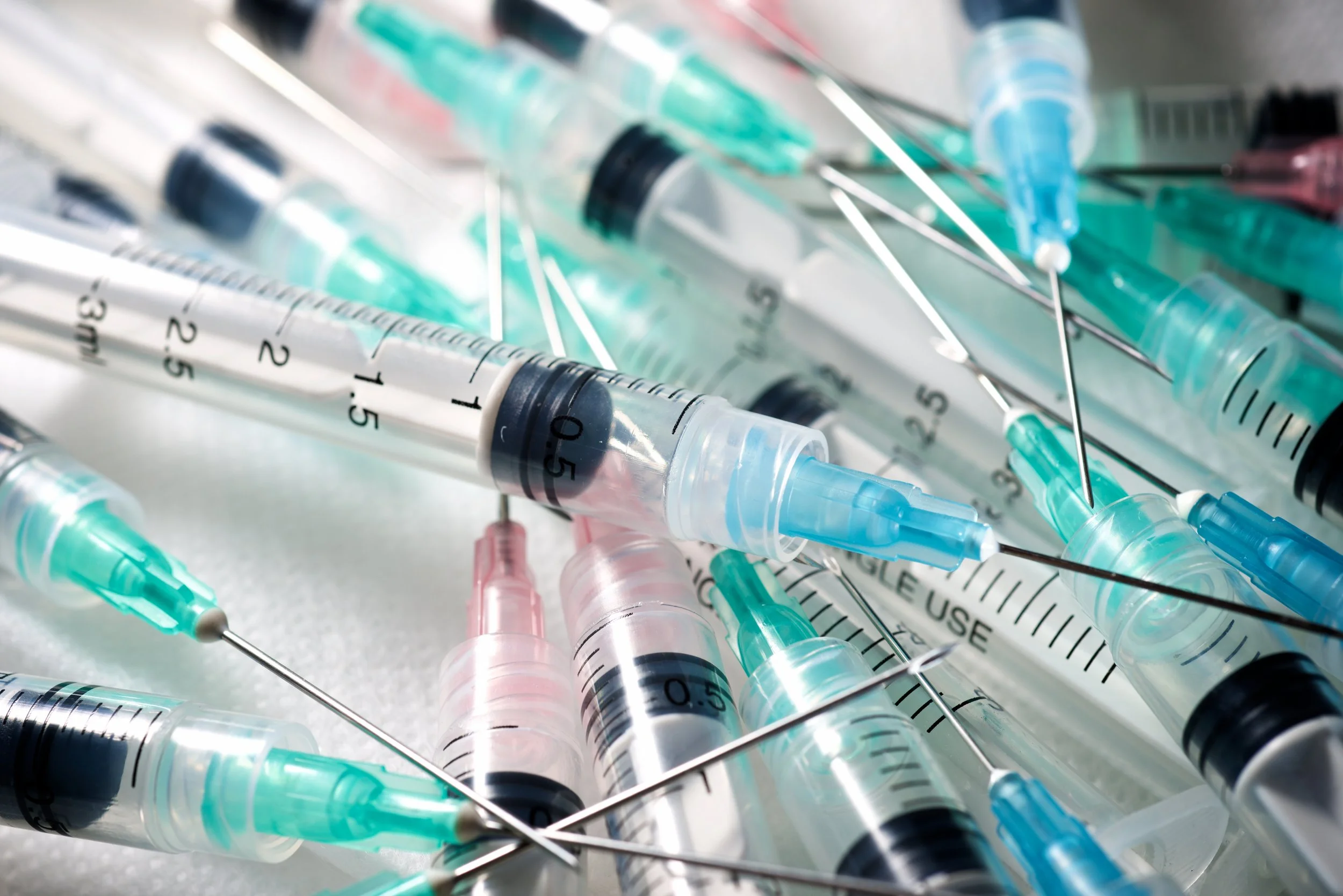
You can’t open a news site or social media app without hearing about peptides these days. But what is usually missing from the surreal AI ads pasted all over Instagram is the very real impact the rise in peptide use is having on people who inject drugs.
In the last year, demand for injecting equipment on Australian needle and syringe programs (NSPs) grew by nearly 10 million units.
This increase is driven largely by a surge in performance and image enhancing drugs (PIEDs) like peptides.
Services are stretched thin but funding hasn't changed to meet demand, and the people at highest risk of hepatitis C and HIV are feeling the effects first.
User’s News spoke to NUAA's acting Harm Reduction Manager Tim Powell about what's happening, what's changed at our own postal NSP, and the importance of access to equipment for all, no matter the substance they're using.
Empty shelves
If you've turned up at a vending machine lately and found it empty, you're not alone.
"On the ground, demand for injecting equipment has increased significantly," says Tim. "This is something that's being experienced across the sector."
Tim estimates demand on equipment is around four times what it was this time last year. The pressure is being felt everywhere, from NUAA's own postal NSP, to primary NSPs and other community services around Australia.
When NUAA's Chief Executive Mary Ellen Harrod spoke to the ABC in August, she said "we're contracted to distribute 500,000 units [of needles and syringes] and we're up to 2 million. We can't keep up with that demand."
"It's particularly difficult in rural areas, where a lot of the distribution is done by vending machines. A lot of those are being cleared out within an hour or two of being filled," she said.
"The whole program is at risk now, because of the increased demands on it."
The result is gaps in the one thing NSPs are built around. Free, no judgement, no-questions-asked access to equipment.
These effects are being felt Australia wide.
Stephanie Stephens, Acting Chief Executive of Directions Health Services in Canberra says the service has had to limit the stock it can give clients due to an increased demand from people who use peptides.
For the past decade, NSPs like Directions Health Services in NSW and the ACT had predominantly helped those seeking to inject heroin or amphetamine.
"But in the past year … we've seen an enormous surge in people accessing sharps and needles to administer peptides,"
"And while we love responding to new community groups and people who we can work with to reduce harms — and there are unique harms associated with peptide use — we're also concerned about the pressure that puts on our supply," Ms Stephens said.
QuIHN in Queensland told the ABC that peptide users at NSPs spiked from around November last year. In Western Australia, Peer Based Harm Reduction described a dramatic increase over six to eight months. And in Tasmania, NDARC found PIEDs related NSP transactions had more than tripled between 2019 and 2026, reaching 12.2% of all transactions in the first half of this year.
What the numbers say
The Kirby Institute collects national data on how much equipment NSPs hand out. Their data shows this trend was already climbing before the latest surge.
Financial year & Needles and syringes distributed by Australian NSPs
2021/22: 47 million
2022/23: 50.8 million
2023/24: 54.6 million
2024/25: 64.4 million
Source: Kirby Institute, Needle Syringe Program National Minimum Data Collection reports.
That’s a jump of almost 10 million in a single year, and about 37% growth over three years. On Kirby’s 2025 snapshot day, methamphetamine and other stimulants were still the most commonly reported drugs injected (47%), followed by opioids (28%), then anabolic steroids and hormones (14%).
Why now?
Nobody has a complete answer yet, and Tim warns there are still a lot of assumptions floating around. His own view is that weight loss medications have changed how people think about injecting.
“The introduction of GLP-1s [has] normalised self administered injections for a broader group of people, particularly subcutaneous injection."
He says steroids, peptides and growth hormones used to be more niche. Now, he says, injecting for your body is "much more normalised, much more accessible and accepted."
Researchers from the University of Queensland made a similar point. They describe a whole new population of people who inject, buying peptides online for muscle, weight loss, recovery, skin, or sleep. Because peptides are marketed as wellness products, most people don't think of themselves as injecting drug users.
When PIEDs are not represented on the drug wheel or the TripSit chart, and not reflected in materials or resources about harm reduction or safe injection, this disconnect makes sense. But just because this group doesn’t consider themselves part of the community of people who inject drugs, they still require the same resources, same services, and same equipment.
This disconnect is often the cause of friction between NSP workers, other NSP service users, and the PIEDs community. It also means they may not be accessing or engaging with vital harm reduction information that helps reduce their injecting risks.
Same equipment, different reasons
Tim says the extra demand is most noticeable with fixed 1ml and 0.5ml syringes, the standard insulin-style syringe.
At NUAA's postal NSP, supply of everything else has stayed quite stable, meaning demand from the NSPs long-standing core community is largely unchanged. The growth is new service users, wanting the same syringe that many people who inject meth and other drugs rely on.
This information aligns with NDARC’s Tasmanian bulletin, which notes supply problems with exactly the type of equipment best suited to peptides, and that this same equipment is in demand among people injecting drugs like methamphetamine.
The increase in demand for shorter needles suggests the surge is driven primarily by peptide use, rather than other PIEDs like steroids. Peptides are water based so usually injected into the fat just under the skin, while steroids are oil based and require a longer needle to reach the muscle.
However, Tim explains that often the standard 1ml syringe isn’t actually the best tool for the job.
“The existing 1ml syringes are not actually the best product or piece of equipment to use for subcutaneous injecting,” he says.
NUAA is working to add shorter syringes with finer needles to the Postal NSP store, better suited for subcutaneous injecting.
Tim hopes they’ll be available within the next few weeks, with resources to go with them. The idea is to help people inject PIEDs “more easily and more safely with specific equipment, and also reduce the strain” on the 1ml syringes.
Sonya Weith, Peer Steroid Educator from QuiVAA suggested an alternative option for PIEDs users to reduce the impact on people who inject meth.
She says by educating service users on the shortages, many are happy to swap to 1ml barrels with interchangeable 27G tips instead, despite the dead space.
Dead space refers to the section inside a syringe and needle, between the tip of the plunger and the needle, that remains trapped after the plunger is fully pushed down. When injecting, a tiny amount of fluid stays behind in the dead space instead of being injected, which can affect precision dosing or waste substances over time.
Baz, Consumer Research Coordinator at NUAA shared another option he's explored personally. He explains that low dead space syringes are available, though notes that they are more expensive and may not be a viable option to source easily. However, the benefit of these types of syringes is that interchangeable needle tips can be used.
Options like these reduce the pressure on supply of 29G 1ml fixed syringes, leaving stock available for injecting drug users who may rely on this specific equipment.
Right now NSPs are largely facing this tide alone, battling to serve everyone equally with very little resources and funding.
When community needs outgrow the program
It's important to remember why NSPs exist.
NSW Health describes the NSP as an evidence-based public health program to reduce HIV and hep C among people who inject drugs. WA Health’s guideline frames it the same way, calling sterile needles and syringes the main strategy for preventing blood-borne viruses among and from people who inject drugs.
And it works. The NSW Police NSP guidelines cite estimates that NSPs prevented 23,324 HIV cases and 31,953 hep C cases in NSW. A NSW Drug Summit briefing paper notes NSPs return up to $5.50 for every dollar spent as less people end up needing care for blood borne viruses or other injecting injuries.
Kirby’s 30-year Australian NSP Survey report shows what decades of reliable access have achieved:
Hep C antibody prevalence among NSP attendees fell from 63% in 1995 to 39% in 2024.
Active hep C infection (RNA) fell from 51% in 2015 to just 8% in 2024, thanks to treatment and cure.
HIV has stayed below 2.5% for 30 years.
Receptive syringe sharing has stayed below 20% since 1997.
Those gains depend on people being able to access new equipment every time.
Tim explains that NSPs were “designed, funded and stocked” to deliver the service they’ve provided for close to three decades. People who use PIEDs have always been part of that, but as a much smaller share. Now, they are one of its primary service user groups.
However, the funding hasn't increased to match this surge in service users.
The 2024 NSW Drug Summit recommended expanding NSPs, especially in regional, rural and remote areas, and the NSW Government’s response said this "aligns with national and state strategies focused on reducing Blood-borne Viruses (BBV) and drug-related harms”. However, peak body NADA said the June Budget delivered no new funding to act on the Summit’s priorities.
The University of Queensland researchers said pointedly, "NSPs must be funded for the number of people they are actually serving, not the number they were serving years ago."
"Right now, the services absorbing this new population are doing it on budgets built for a different era, and a different injector."
This has meant that rather than expanding their services, many NSPs have had to adapt to make limited supplies go further, while protecting those they’re actually funded to serve.
Changes to NUAAs Postal NSP
NUAA’s Postal NSP started during COVID lockdowns as a supplement to the Crown Street NSP, now run by KRC. It was built for existing clients who couldn’t attend the service in person, and for people in regional areas, who have always been the priority.
It grew steadily from there. Some higher-cost items, like wheel filters, had a cost-recovery price but most equipment was free with a flat shipping rate to anywhere in NSW. When NSW guidelines changed, butterflies and 10ml and 20ml barrels were brought back too.
Then the surge hit.
“The NSP always operated at a loss. It was always putting out more equipment than it was funded to do, and [the increase in service users] pushed it well beyond the realm of viability and put the service at risk,” Tim says.
For most of the first half of this year, NUAA ran a model with one free box per month, with any extra equipment at cost price.
But demand kept climbing.
The service sent out more than 1.67 million pieces of equipment last year, more than twice what it was funded to deliver, and was running at a loss that could no longer be sustained.
Recently, the model changed. Here's where things stand currently:
The monthly free box has been discontinued. If cost or anything else is a barrier, the team will do their best to help. You can reach them confidentially through the form on the updates page.
Equipment is sold at cost recovery, below retail price. NUAA doesn’t make a profit on it.
There’s no fixed cap on how much sterile equipment you can order.
Regional shipping stays free. This is subsidised by the $20 flat metro shipping fee, because people in the city generally have more options: NSPs, pharmacies and other sources of equipment.
We are continuing to work with community and health to ensure that those without access to NSPs who are at risk of BBV can access equipment without barriers. Our Postal NSP team are available to talk and discuss access needs to ensure no one goes without.
Tim says the community response has been better than he expected.
“There’s been a lot less pushback than I would have necessarily expected. Many people have understood why we’ve had to make these changes because they’ve seen these changes play out.”
“We’re not looking to be profiteering. We’re just looking, as is everyone in this sector right now, to navigate this in a way that preserves the access for all people and protects their wellbeing and health as much as possible.”
For many in the alcohol and other drugs sector, watching this issue play out is like looking into a funhouse mirror. We’re seeing the same issues that impacted people who inject drugs thirty years ago now pushed on to a whole new group of people.
Shared stigma
People who inject drugs have lived with stigma far longer than NSPs have existed. It's this stigma, fear of the authorities, and hard to reach services that become barriers to accessing sterile gear, often causing people to re-use or share equipment.
People who use PIEDs face a similar battle.
A study found people who use steroids expected to be judged at NSPs and by health workers, which made them less likely to use services or speak up about health problems. Researcher Dr. Tim Piatkowski has described a kind of “othering”, where PIEDs are seen as enhancing, and other drugs as destructive.
Before joining NUAA, Tim Powell worked in a primary NSP, and he’s seen the lateral violence that can play out between different people using the same service.
He spoke about the importance of recognising the stigma that both groups share.
“There’s parallel experiences of stigma and shame that are felt by these different groups,” he says.
“It is about everyone having the right to access the equipment that is right for their specific health, wellbeing and safety needs. Those principles are universal regardless of what substance you’re injecting.”
That’s not a new position. When Kirketon Road Centre limited supply to people injecting PIEDs back in 2014, Kirby and UK researchers pushed back, backing equitable, non-discriminatory NSP access for everyone who injects.
Pitting communities against each other distracts from the core problem, that the funding of these services hasn’t kept up with the increase in demand.
Education
Many people collecting equipment for peptides and PIEDs simply don’t know any of this.
They don’t know stock is running low. They don’t know why the program exists, or that a regional machine they empty may have been someone else’s only option that day.
“Traditional NSP service users understand hep C, HIV, blood-borne viruses,” Tim says.
“That is maybe an education piece that’s not understood as much by these new communities accessing the NSP.”
He says that gap can create tension, with people unsure why equipment is harder to get or why limits seem to apply to some and not others.
The changes NUAA and Health NSPs have made are about keeping the focus on the program’s core goal, reducing blood-borne virus transmission, which still isn’t widely recognised as a real risk for people using PIEDs and peptides.
A few things everyone can do, whatever they inject:
Order ahead instead of clearing a machine. If you’re stocking up for weeks or months, use the Postal NSP so machines stay stocked for people who need them that night.
If you can afford to buy, consider it. It helps leave equipment available for people who can’t.
Ask for the right equipment. Tell NSP staff what you’re injecting so they can match you with the right syringe and needle.
The next step will be to engage people who inject PIEDs themselves, to make sure they understand they’re part of a wider group of people who use drugs. If we can work together as a collective, we are much more likely to effect change and make everyone safer.
Risks
For people injecting psychoactive drugs, running short means reusing or sharing. That’s how hep C and HIV spread, and it also means more vein damage, infections and abscesses. The progress our community has made on hep C can go backwards.
For people injecting peptides and PIEDs, the risks include infections, abscesses and injection-site injuries, plus blood-borne viruses if equipment or vials are shared, according to the NSW Health PIEDs fact sheet.
The University of Queensland researchers point to reports of people reusing needles, poor injecting hygiene and missing early signs of infection. Earlier research by Piatkowski and colleagues found misinformation and low injecting knowledge were driving some of this.
Unregulated peptides add another layer. The TGA has warned about contamination, wrong dosing and allergic reactions, and is stepping up enforcement. NSW Health has also issued a safety alert on peptides. However, a crackdown doesn’t help people who already have vials in the fridge. They need safety information now.
This is why it's important that peptide and PIEDs users are able to visit NSPs. For many, it may be their first contact with harm reduction advice. That’s the NSP doing its job.
Options for access
Regional, rural and remote communities are hit hardest when supply tightens. One study found regional access to PIEDs equipment is a problem both here and overseas.
Here are your options in NSW.
NUAA’s Postal NSP
NUAA’s Postal NSP posts equipment anywhere in NSW, with free shipping to regional areas. Orders arrive in plain packaging with no indication of what’s inside. Equipment is sold at cost, below retail price, and there’s no fixed cap on how much you can order. Orders usually go out within one to three business days though may take longer in busy periods, so order before you run out.
If cost is a barrier, get in touch. No one should go without sterile equipment because of cost.
Use the confidential form, email postalnsp@nuaa.org.au, call (02) 9171 6650, or freecall 1800 644 413, during business hours.
Getting equipment for mates is a valued part of harm reduction. If you’re ordering for other people, contact the team so they can set you up in a way that protects everyone’s privacy.
Public NSP outlets
NSW Health’s NSP outlet map lists every public NSP in NSW, including community health centres. Staff can also help with hep C and HIV testing and referrals.
Pharmacies
Many community pharmacies take part in the NSW Pharmacy NSP, funded by the NSW Ministry of Health and run through the Pharmacy Guild. They can provide or sell fitpacks and other equipment, and take back full sharps containers. You have every right to be served with respect. If you experience stigma at a pharmacy, you can lodge a complaint with the Pharmacy Council of New South Wales, or contact NUAA’s PeerLine and we can advocate on your behalf.
Vending and dispensing machines
Machines give 24/7 access, which is important when nothing else is open. But they’re emptying fast. Ask your local NSP when machines are usually restocked, and have a backup plan.
Purchasing online
If you have the financial means to purchase your gear, there are many online medical suppliers that offer a range of equipment, though ordering anonymously may not be possible.
Where to from here?
Tim is clear that many actions NUAA and NSW Health have taken so far have been about holding the line.
“Many of the changes and actions taken so far have largely been just about preservation of what we already have” he says. This has mostly come in the form of equipment limits or referrals to other sources, which may be equally strained.
Those changes were made fast and without much consultation, which he says has “created more frustration and potentially contributed to more oppositional relationships between different service user groups.”
What he wants to see from NSW Health and the Commonwealth over the next 12 months starts with people who use the service.
“The harm reduction needs of the people who use peptides and steroids have long been poorly understood by the NSP system,” Tim says.
There aren’t the same linkages and supports that exist for blood-borne viruses, or for overdose through naloxone.
“Understanding better referral pathways is really, really important. And that starts with good consumer engagement and representation in service planning.”
Keeping NSPs working means:
Stronger consumer representation in NSP planning, including people who use peptides and PIEDs alongside our long-standing community.
Funding NSPs to meet real demand for everyone who injects, regardless of what they inject.
Referral pathways and peer-led education for PIEDs users.
Expanding NSPs in regional, rural and remote NSW.
Never excluding anyone from accessing services based on drug type. Every interaction with a harm reduction service is a win.
NSPs were built by our community, and they’ve kept HIV low and driven hep C down for decades. Nobody who injects should have to prove they deserve to stay safe. Not the person using meth in a country town, and not the person using peptides from the gym.
The solution is the same for both. The right equipment, in the right places, for everyone who needs it.