
More Than A Mortgage Broker: Nermalee on Volunteering, Purpose & Giving Back
Friday, 12 June, 2026
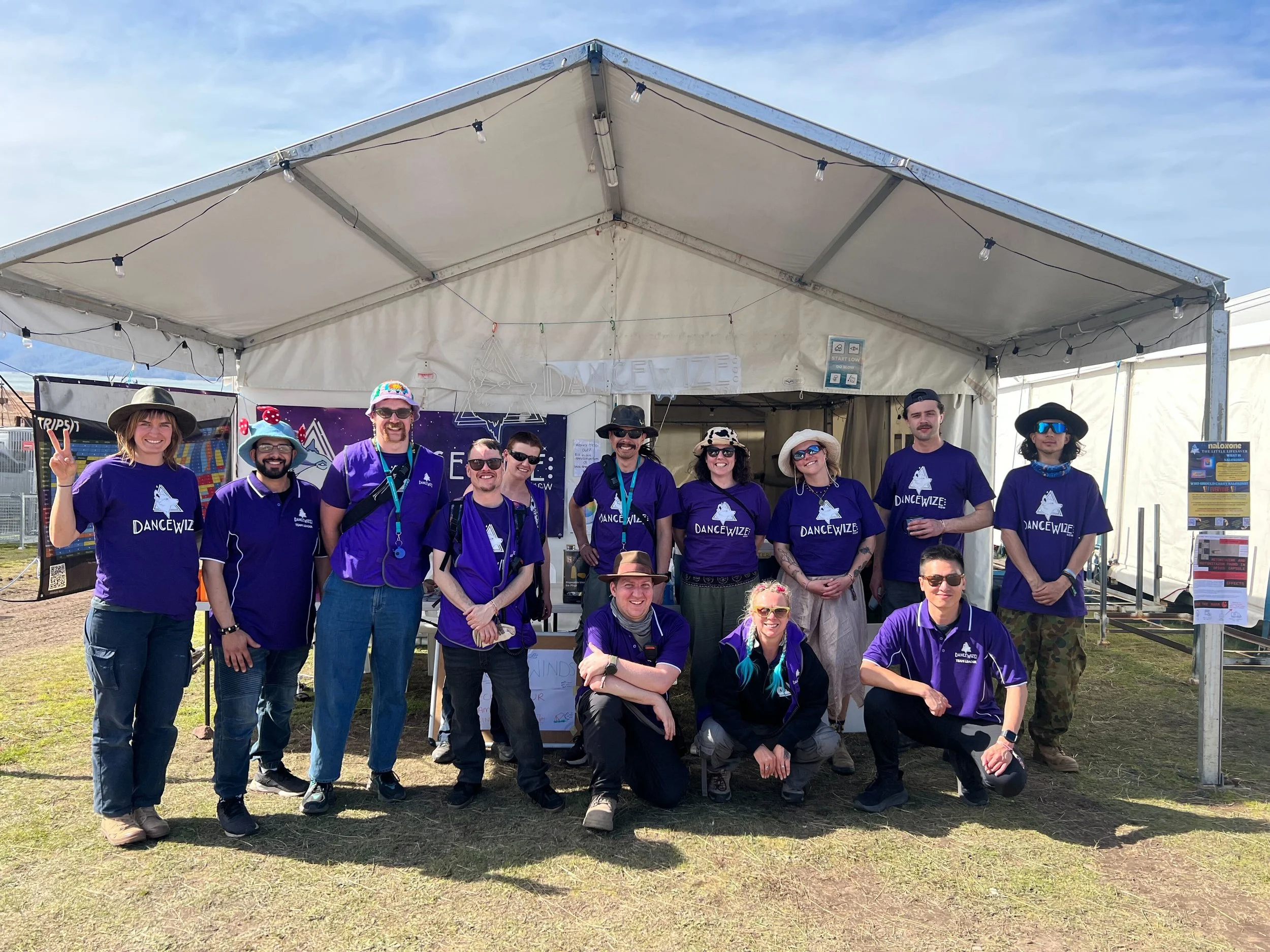
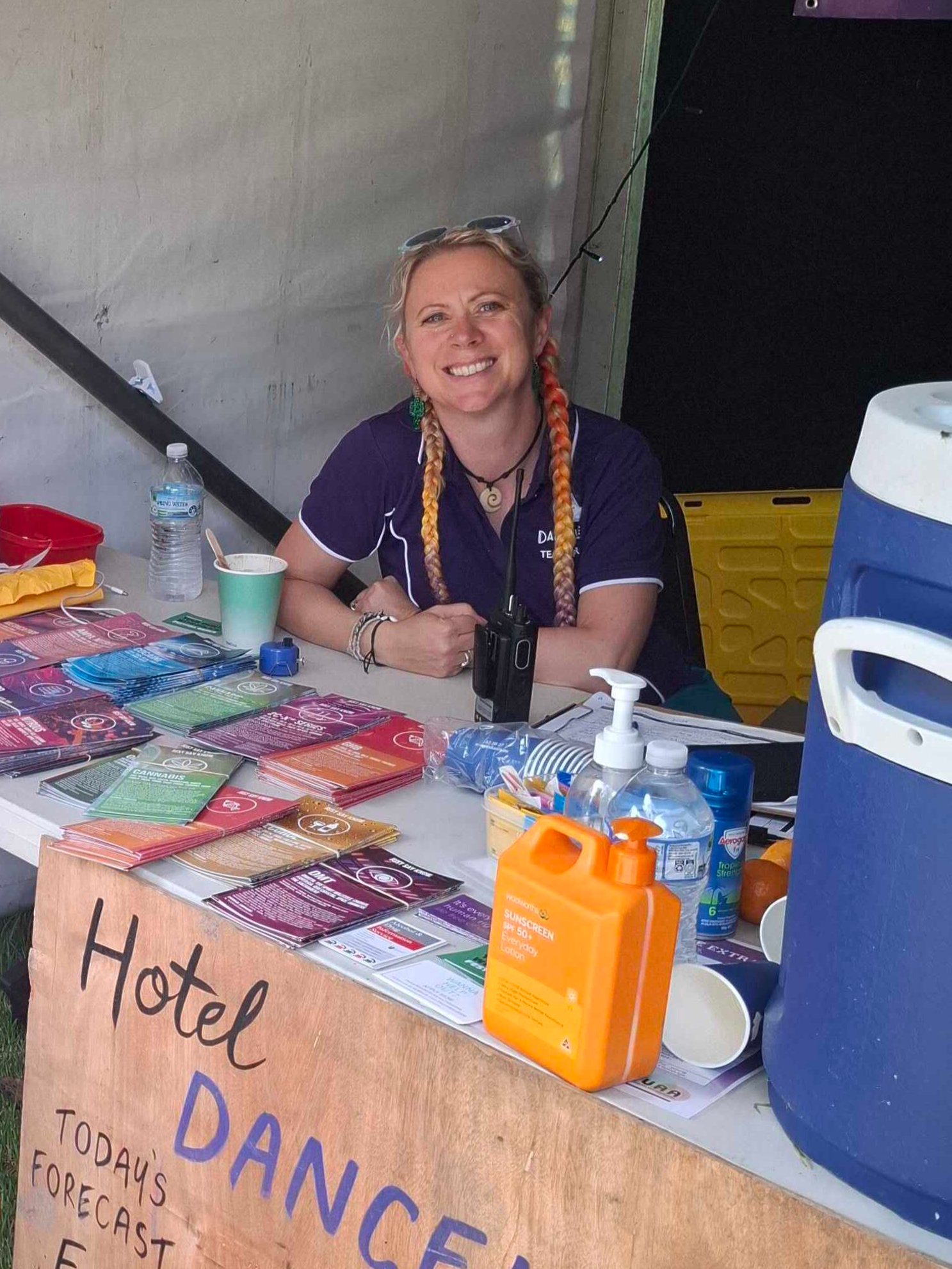
If you met Nermalee at a music festival, you might find her in a purple vest checking in on a partygoer, calmly passing on harm-reduction information, or simply chatting with someone who may be having a rough night.
On a weekend morning, you may spot her at Umina Beach, in the water or manning the first aid station while people of all ages and abilities experience the joys of surfing.
And somewhere in between her busy schedule as a self-employed mortgage broker, she’s fielding calls with people experiencing domestic-violence trying to untangle their finances, or distributing pet food to struggling families so they don't have to surrender the dog they love.
Nermalee is a casual staff member with DanceWize NSW, and a passionate volunteer across four community organisations. Originally from the UK, she made Australia home 14 years ago, bringing with her nearly three decades of experience in finance. Today, as mortgage broker on the Central Coast, she has found a way to make her professional life work for the causes she cares about, and to use her spare time to show up for communities that need her.
Growing up in the UK, Nermalee spent her twenties and most of her thirties travelling, working in finance, and by her own cheerful admission, going out and having a good time. Finance was never a grand calling, it was practical.
"It was always more about making money than some kind of aspiration," she says. "I did a lot of travelling. It was just to fund being able to go out and party."
Nearly 30 years later, she's still in the industry, now self-employed, which suits her independent spirit far better than any corporate desk ever did.
In 2011 she made the move to Australia and settled on the Central Coast, where she's been ever since.
Going solo a couple of years ago was a turning point. "The job I was working at was just not right for me. I thought, well, if I go self-employed, I've got a lot more control."
There was anxiety in it, fees, a mortgage, the uncertainty of striking out alone, but she aligned with a team at Truly Finance whose values matched her own.
It was only in her forties, as she began to reassess what she wanted her life to look like, that volunteering entered the picture.
"I always thought my path was going to be getting married and having kids," she reflects.
"My twenties I spent partying. Most of my thirties I also spent partying. And then coming into my forties, I had to dig deep in my soul. Am I going to be one of those people that is always upset and feels they've missed out? Or am I going to channel that into something else?"
She chose the latter and has never looked back.
"Life didn't turn out the way I thought it was going to be. But I'm very, very lucky. I have a job. I own a house. I get to go down the beach in the morning with my dog. I try to count my blessings, because I appreciate that a lot of people are not as fortunate as I am."
Volunteering itself started with missing her people. After trips back to England and Berlin, Nermalee returned to Australia feeling the absence of old friends from the dance music scene she'd long been part of. "I kind of felt I'd stepped away from that in recent years."
About four years ago, a Guardian article mentioning DanceWize caught her eye and she had a hunch: these were going to be her kind of people. She was right.
What she found wasn't just a community, it was an education.
"I thought I knew an awful lot about partying and things like that," she says. "Turns out I knew jack shit.”
“I've learned so much about harm reduction. It just blows me away. The people, the knowledge, the broader aspect of what NUAA does."
DanceWize NSW, a program run by NUAA, sends peer volunteers to music festivals across NSW to increase the safety of festival patrons. Volunteers, known as Key Peer Educators (KPEs), are recruited directly from festival and rave communities, because lived experience is the whole point.
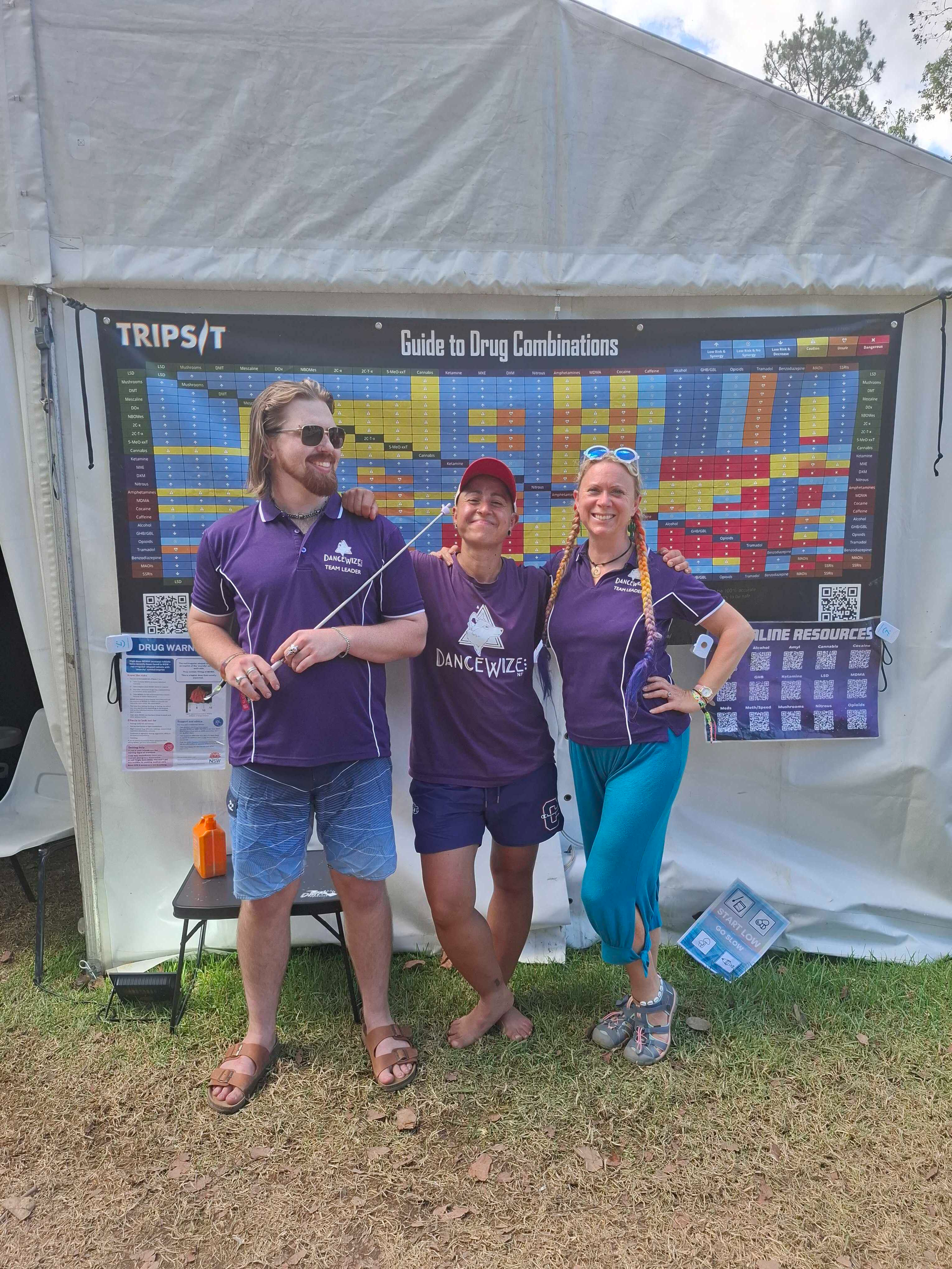
This year, Nermalee decided she wanted to be more involved with her volunteering.
"I decided to actually focus on four charities, charities I already supported," she says. "And I want to be hands-on with all of them, not just writing a cheque."
Part of that decision was about values. Being self-employed and being able to volunteer meant she could align herself with people she actually wanted to work with.
"At NUAA you get to work with awesome people every day. Whereas in the finance world, not to say they're all douches, but there's an awful lot of values that really conflict."
When she joined Truly Finance, she made one thing clear upfront, she wanted to support her own charities. Working with colleagues who have their own causes and organisations they support made this ask easier.
"I said, look, I know what you're doing, but do you have any issues about me supporting my own causes? And they said, yeah, that's fine."
Alongside DanceWize, Nermalee volunteers with the Disabled Surfers Association (DSA) at quarterly events on the Central Coast, where participants of all abilities are taken out for a surf experience in a safe, joyful environment.
She’s still learning to surf herself and is the first to acknowledge the irony. "I'm a really bad surfer. I'm still trying to learn," she laughs.
"But it's a beautiful morning. The last couple of times I've been a first aider, which has been a little bit nerve-wracking. In the back of my head I'm thinking, please don't have a heart attack! And if you do, let’s make sure you're dry first."
Her introduction to Hornsby Ku-ring-gai Women's Shelter came through a client who had previously donated to them. Nermalee reached out, made a donation, and then offered something else too: her financial expertise. Many of the women the shelter supports are navigating the complex and frightening task of separating their finances from an abusive partner.
"A lot of the people they're dealing with are having issues trying to work out their finances. Some of the banks can help with domestic violence and provide assistance. So I'm just on call, if there's anyone who's a little bit worried about how they're going to go about separating their mortgage, whether or not they can, ." Simple, practical, powerful.
The newest addition to her volunteer roster is the Stay Foundation, and she tears up just talking about it. Based on the Central Coast and Hunter Valley, they are one of only four charities in Australia actively focused on keeping pets with their owners during tough times, rather than sending animals to rescue.
With more than 400 rescues across the country, not counting council pounds, the gap in this kind of preventative support is enormous. The Stay Foundation is 100 percent volunteer-run. Jesse, who leads the organisation, spent over ten years working in rescues before deciding enough was enough.
“He was sick of animals being dumped and euthanised when, if support was given to owners initially, it wouldn’t happen,” Nermalee explains. “Most of the time it comes down to owners not having enough money, not because they don’t love their pets.”
For NUAA’s community in particular, Nermalee touches on what the Stay Foundation can offer.
“They are a brilliant resource for our community members in the Central Coast and Hunter Valley area, focusing entirely on keeping pets with their owners during tough times,” she says.
If you’re working with someone hesitant to enter rehab or crisis care because they’re worried about their animal, the Stay Foundation can arrange emergency foster care, boarding, and subsidised vet treatment while their owner gets the support they need.
It’s exactly the kind of practical, non-judgmental help that removes a barrier, and for Nermalee, who understands harm reduction through her work with DanceWize and NUAA, the philosophy is deeply familiar.
“This is harm reduction, really, just for animals. Prevent them being abandoned and euthanised. Go to the root cause and provide assistance where it’s needed.”
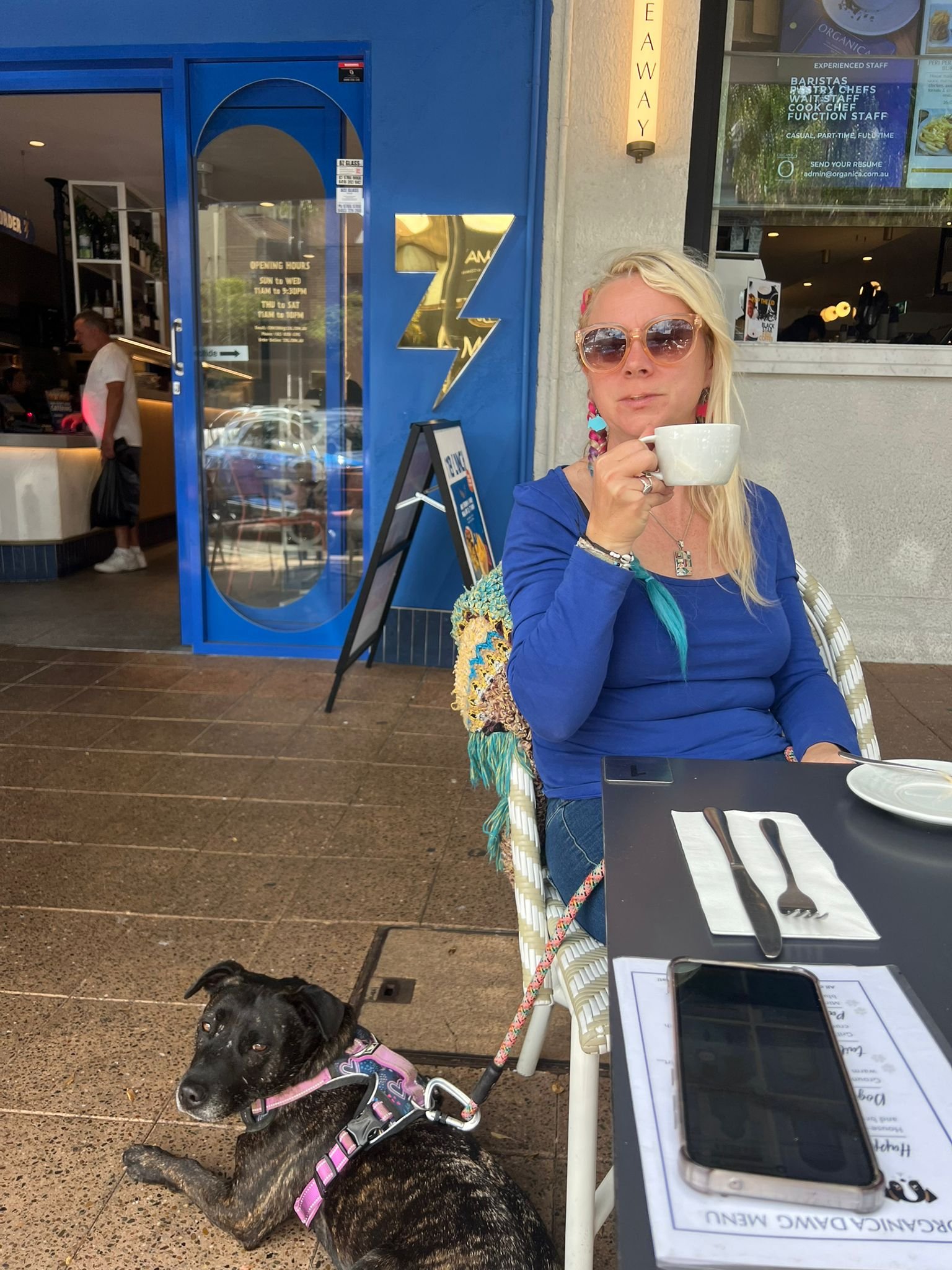
The connection became even more personal when she thought about her own rescue dog, Susie. Nermalee adopted Susie not long ago, a terrified, abandoned animal who turned out to be the most gentle, well-behaved dog she’d ever had.
“I always wondered what led her previous family to abandon her that way. Because she is the best-behaved dog I’ve ever had. I would pay thousands of dollars for a dog like her. She’s so lovely.”
The Stay Foundation exists precisely to prevent stories like Susie’s, by stepping in before a family ever reaches the point of no return.
With so many causes competing for attention, how do you choose? For Nermalee, the answer is personal connection, and a healthy scepticism of organisations that spend more on marketing than on mission.
"Especially being on the Central Coast, there are a lot of charities that are really big," she explains. "It's very difficult to get in on a grassroots level where you actually feel you're making a difference. If I joined Oxfam in Australia, where do you even begin? You're always going to be this tiny little cog in the wheel."
She wants to see the impact of her time and money directly. She'd rather know that what she gives goes to a woman in a shelter, a dog getting pet food, or a volunteer at a festival, not to a marketing budget.
Her grandfather was her original inspiration. When he retired, he volunteered for Oxfam for 20 years alongside his wife, nearly a full-time commitment that raised thousands of pounds for the charity.
"He was a very, very active participant. It was almost a full-time job. He really enjoyed it." She looked up to him deeply.
"There's a saying, isn't it, that to help you can either donate your time or donate money. At the moment I'm in a position where I'm doing both."
She estimates that between volunteering hours and financial donations, she gives up to 10% of her income. Not because she's extremely wealthy, but because she's made a conscious choice.
"I'm not earning a lot of money at the moment, so the donations I'm making are pretty small. But it still represents a significant part of my income. That's the thing." She pauses. "I don't have kids. I've got a resource of time. And I'm not a materialistic person. I don't need a lot to be happy."
"I'm earning enough to keep me happy, to pay my bills, and to help other people. Quality of life and purpose. That's what it comes down to."
For anyone sitting on the fence about volunteering, Nermalee has practical wisdom, and a lot of understanding for where people are at in their lives.
Time is the biggest barrier, she acknowledges. "I think it’s probably the main factor for people, because they just don't have the time. And if you're in that situation in your life at the moment where you don't feel that you have the time, then start making a donation of ten dollars a month.”
“Work out how much money you've got and go: right, here are five organisations I'm going to give ten dollars a month to. That's fifty bucks a month, the equivalent of a couple of coffees a week. When you break it down, it's manageable for most people."
"Either donate your time or donate some money. Or if you can, do both."
For those ready to give time, she has a counter-intuitive tip: don't start with the biggest, most visible charities. Instead, find something that matches your passions.
"Whenever people think volunteering, they think charity shop or a Bunnings sausage sizzle. But it's more than that. DanceWize was really quite enlightening. There was an organisation out there that was essentially about raving? That I could participate in? Come on!”
“If your passion is football, you can help kids learn to play. If it's comedy, there are workshops where you can help people come out of their shell. If it's boats, there are organisations that maintain old ferries and take people out on Saturdays. Whatever you're interested in, you can find a cause where you can use that."
And sometimes, volunteering doesn't mean an organisation at all. "It could just be helping your neighbour," she says simply.
"Your elderly neighbour who needs a lift to the supermarket. The single mum next door with three kids, offer to take her dog for a walk, or say, 'How about an afternoon off while I watch your kids?' It doesn't have to be for an organisation. We should look after each other a lot more."
Her final piece of advice? Trust the process.
"I kind of believe in serendipity. If you want to be a volunteer and you're wondering where to start, something will come along your way. Just keep your eyes and ears open. There are always flyers in supermarkets, magazines, community boards. The opportunities are there. You just have to bloody do it."
Ask Nermalee what volunteering has taught her and she doesn't hesitate: "Not enough people do it."
"I think of everyone I know, none of them volunteer," she says, almost in disbelief. "And there's a tonne of charities out there that need people. The gap between the need and the willing hands is real."
For the Users News readership in particular, she has some insight. She's seen how people can come through the peer-support ecosystem, NSPs, drug user organisations, community health, having experienced stigma, isolation, and the loneliness of feeling like the world has passed them by. Volunteering, especially peer-based volunteering, can offer something profound in return.
"People feel stigmatised, and so they feel alone," she says. "The first step is seeking some kind of help, which is essentially being part of a community, being seen and heard. But then if you step up and become a peer volunteer within one of those organisations, you are held in a much deeper respect.”
“People listen to you. It elevates you. It makes you want to do better, because you want to help people. And that makes you feel good."
She's seen it happen again and again. People who came to organisations like NUAA for support, later becoming the ones who offer it.
"It gives you a sense of purpose," she says. "It takes you out of your head, stops you thinking about yourself all the time,. There's always someone that's worse off than you. And sometimes that's exactly what you need to remember."
In Nermalee’s wise words: “Don’t be a dick, just volunteer.”
Get Involved
If Nermalee's story has inspired you to take your first step, here are the four organisations she supports. Each welcomes volunteers, donations, or both.
DanceWize NSW is NUAA's peer-led harm-reduction program at music festivals and dance events across NSW. Volunteers (Key Peer Educators, or KPEs) are recruited from the festival and rave community and provide crowd care, safer drug-use education, and support to partygoers. All volunteers receive First Aid training and comprehensive harm-reduction education, as well as free tickets to the festivals they volunteer at. Applications open periodically. Check the website for expressions of interest.
Disabled Surfers Association of Australia (DSA)
Established in 1986, the DSA gives people of all ages and disabilities the chance to experience surfing in a safe, joyful environment. The Central Coast branch holds events four times a year at Umina Beach. Volunteers don't need to be experienced surfers, roles exist in and out of the water. Visit the website to find your nearest branch and upcoming events.
Hornsby Ku-ring-gai Women's Shelter (HKWS)
HKWS provides temporary supported accommodation for women experiencing domestic violence and homelessness. The shelter receives no government funding and is entirely run by volunteers and community donations. Support can take many forms: hands-on volunteering, financial donations, or like Nermalee, offering your professional skills to women navigating financial separation.
The Stay Foundation is a community charity dedicated to keeping pets with the people who love them. Operating in the Hunter and Central Coast regions, they provide pet food, emergency vet support, and practical care assistance to vulnerable pet owners so families don't have to face the heartbreak of surrendering their animals. Volunteers are always welcome, check the website to get involved.